"Don't You Just Upload It to ChatGPT?"
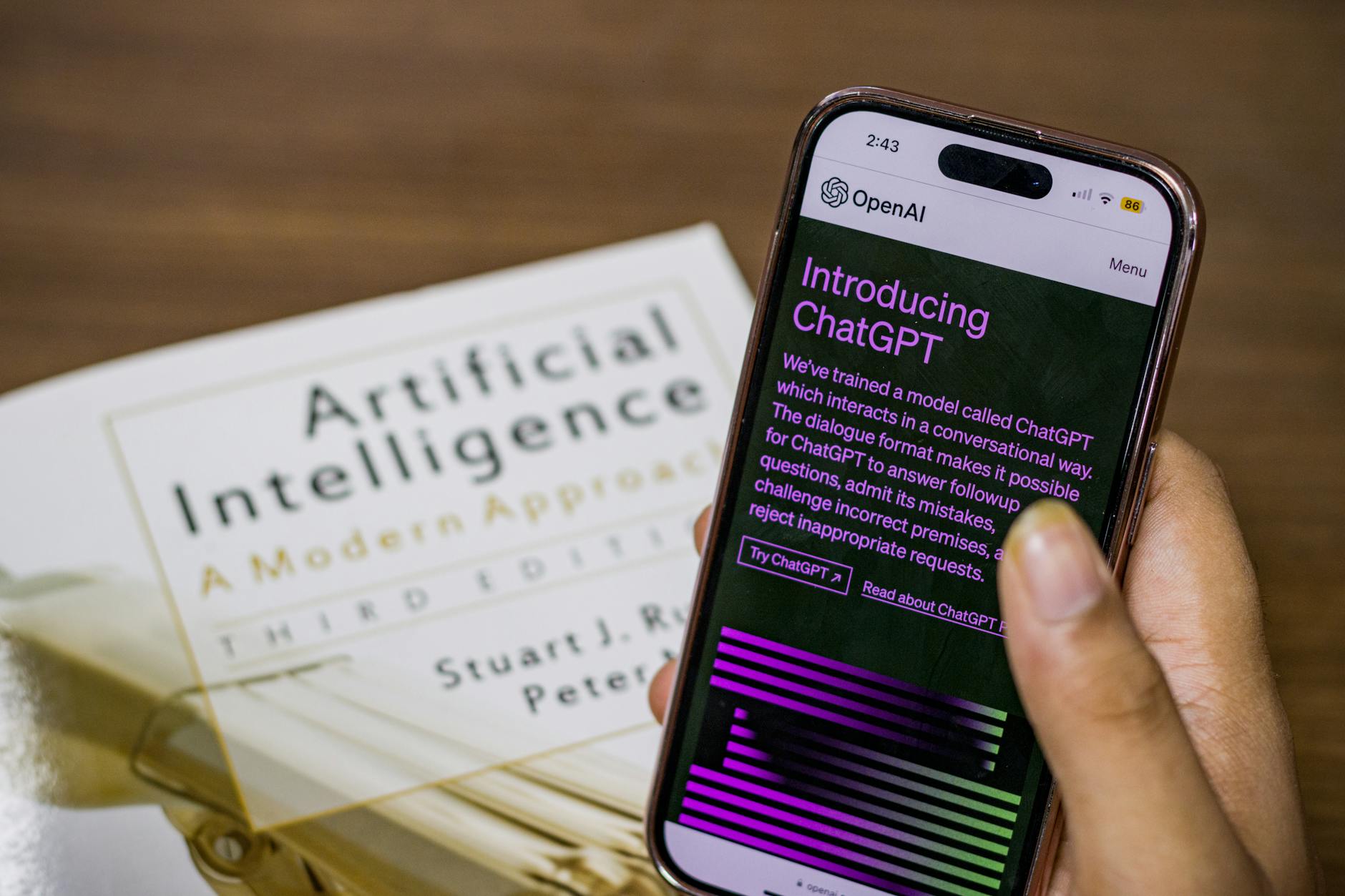
ChatGPT and other large language models (LLMs) have taken the world by storm. From writing marketing copy to generating code, the possibilities seem endless. But what happens when you start feeding these powerful AI tools your financial information? The convenience is tempting, but the risks are substantial. This article dives deep into the implications of using ChatGPT and similar AI platforms for financial tasks, covering data security, accuracy, and the future of finance in an age of increasingly sophisticated AI.
The Allure of AI in Finance: What Can ChatGPT Actually Do?
Before we delve into the dangers, let’s acknowledge the benefits. ChatGPT can, at first glance, appear incredibly useful in the financial sphere. Here’s a rundown of what it can seemingly do:
- Summarize Financial Reports: Need to quickly grasp the key takeaways from a lengthy 10-K report? ChatGPT can provide a summary.
- Explain Complex Concepts: Struggling to understand the difference between a Roth IRA and a traditional IRA? ChatGPT can break it down into simpler terms.
- Generate Investment Ideas: You can ask ChatGPT for potential investment opportunities based on your risk tolerance (though, as we'll discuss, this is where things get very risky).
- Budgeting Assistance: ChatGPT can help create a basic budget plan.
- Draft Financial Documents: Some users attempt to use it for drafting letters or even simple contracts related to financial matters.
But these apparent capabilities mask some critical underlying issues. The core problem isn't necessarily what ChatGPT can do, but how it does it and what it does with the data you provide.
The HUGE Risks: Why You Shouldn't Trust ChatGPT With Your Financial Data
Let's get straight to the point: uploading sensitive financial data to ChatGPT (or any publicly available LLM) is a serious risk. Here’s a detailed breakdown:
- Data Privacy Concerns: ChatGPT’s training data includes publicly available information scraped from the internet. Your uploaded financial documents – even seemingly innocuous ones – become part of that dataset. This means your information could potentially be re-distributed or accessed through future iterations of the model. OpenAI’s data usage policies (and those of competitors) are constantly evolving, and relying on them for long-term data privacy isn't a solid strategy.
- Security Breaches: LLMs are attractive targets for hackers. A successful breach could expose the data of all users, including your sensitive financial information.
- Inaccurate Information: ChatGPT is not a financial advisor. It's a language model designed to generate human-like text. It can, and will, provide inaccurate, misleading, or even completely false information. Acting on this inaccurate advice could have serious financial consequences. It doesn't understand nuance, market conditions, or your personal financial situation.
- Phishing and Social Engineering: Malicious actors can use ChatGPT to craft incredibly convincing phishing emails or social engineering attacks. Imagine a highly personalized email referencing details from a financial document you uploaded – it's far more likely to succeed than a generic phishing attempt.
- Compliance Issues: Financial institutions are subject to strict regulations regarding data privacy and security (like GDPR, CCPA, and others). Using ChatGPT to process client data could put these institutions in violation of these regulations.
- "Hallucinations" & Fabricated Data: ChatGPT is prone to "hallucinations" – making up facts or presenting fabricated data as truth. In a financial context, this could lead to disastrous decisions.
Specific Financial Scenarios: What's Especially Dangerous?
Certain financial tasks are particularly risky to perform with ChatGPT:
- Tax Information: Never upload tax returns, W-2s, or any other tax-related documents. This is a goldmine for identity thieves.
- Bank Statements & Account Details: Sharing account numbers, routing numbers, or transaction history is incredibly dangerous.
- Investment Portfolios: Uploading details about your investments provides a roadmap for scammers.
- Loan Applications: Providing personal financial information for a loan application through ChatGPT exposes you to identity theft.
- Estate Planning Documents: Wills, trusts, and other estate planning documents contain highly sensitive information and should never be shared with a public AI.
Responsible AI Use in Finance: What Can You Do?
The future of finance will involve AI. But it needs to be implemented responsibly. Here are some guidelines:
- Prioritize Privacy: Avoid uploading any personally identifiable information (PII) or sensitive financial data to publicly available LLMs.
- Focus on General Information: Use ChatGPT for basic explanations of financial concepts, but don’t rely on it for specific advice.
- Verify, Verify, Verify: Always double-check any information provided by ChatGPT with trusted sources. Consult with a qualified financial advisor before making any investment decisions.
- Consider Private, Secure AI Solutions: Some companies are developing AI solutions specifically designed for the financial industry with robust security measures and data privacy safeguards. These often come with a price tag, but the added security can be worth it. Look for solutions designed for your specific institution or needs.
- Understand Data Usage Policies: Carefully read the data usage policies of any AI platform before using it. Pay attention to how your data is stored, processed, and used.
- Embrace Multi-Factor Authentication (MFA): Use MFA on all your financial accounts to add an extra layer of security. https://example.com/ offers excellent MFA hardware options.
- Stay Informed: The AI landscape is evolving rapidly. Stay up-to-date on the latest security threats and best practices.
The Future of Fintech and AI: What’s on the Horizon?
We're already seeing advancements in AI that address some of these concerns. Federated learning, for example, allows AI models to be trained on decentralized datasets without actually exchanging the data itself. This enhances privacy. However, these technologies are still in their early stages of development.
The financial industry is investing heavily in AI for a variety of applications, including:
- Fraud Detection: AI algorithms can identify fraudulent transactions with greater accuracy than traditional methods.
- Algorithmic Trading: AI-powered trading systems can execute trades based on complex algorithms and market data.
- Customer Service: Chatbots powered by AI can provide instant customer support.
- Risk Management: AI can help financial institutions assess and manage risk more effectively.
But even with these advancements, the human element remains crucial. AI should be used as a tool to augment human capabilities, not replace them entirely.
A Quick Comparison of AI Tools and Risks
| AI Tool/Application | Potential Benefits | Key Risks |
|---|---|---| | ChatGPT (Public) | Quick summaries, explanations | Data privacy, inaccuracy, security breaches | | Private AI Solutions (Fintech) | Secure data processing, tailored analysis | Cost, potential for bias in algorithms | | AI-Powered Fraud Detection | Reduced fraud losses | False positives, algorithmic bias | | Algorithmic Trading | Faster execution, potential for higher profits | Market volatility, system errors |
Don't Be the Statistic: Protect Your Financial Future
The convenience of using ChatGPT for financial tasks is undeniable. But the risks are far too great to ignore. Think twice before uploading any sensitive information to a public AI platform. Protect your financial future by prioritizing data privacy, verifying information, and consulting with qualified professionals. The promise of AI in finance is exciting, but it must be approached with caution and a healthy dose of skepticism.
Disclaimer: I am an AI chatbot and cannot provide financial advice. This article is for informational purposes only and should not be considered a substitute for professional financial guidance. The affiliate links contained in this article may result in a commission if you make a purchase through those links. This does not influence my recommendations or the information provided.