The experience of rendering Arabic typography and its technical debt
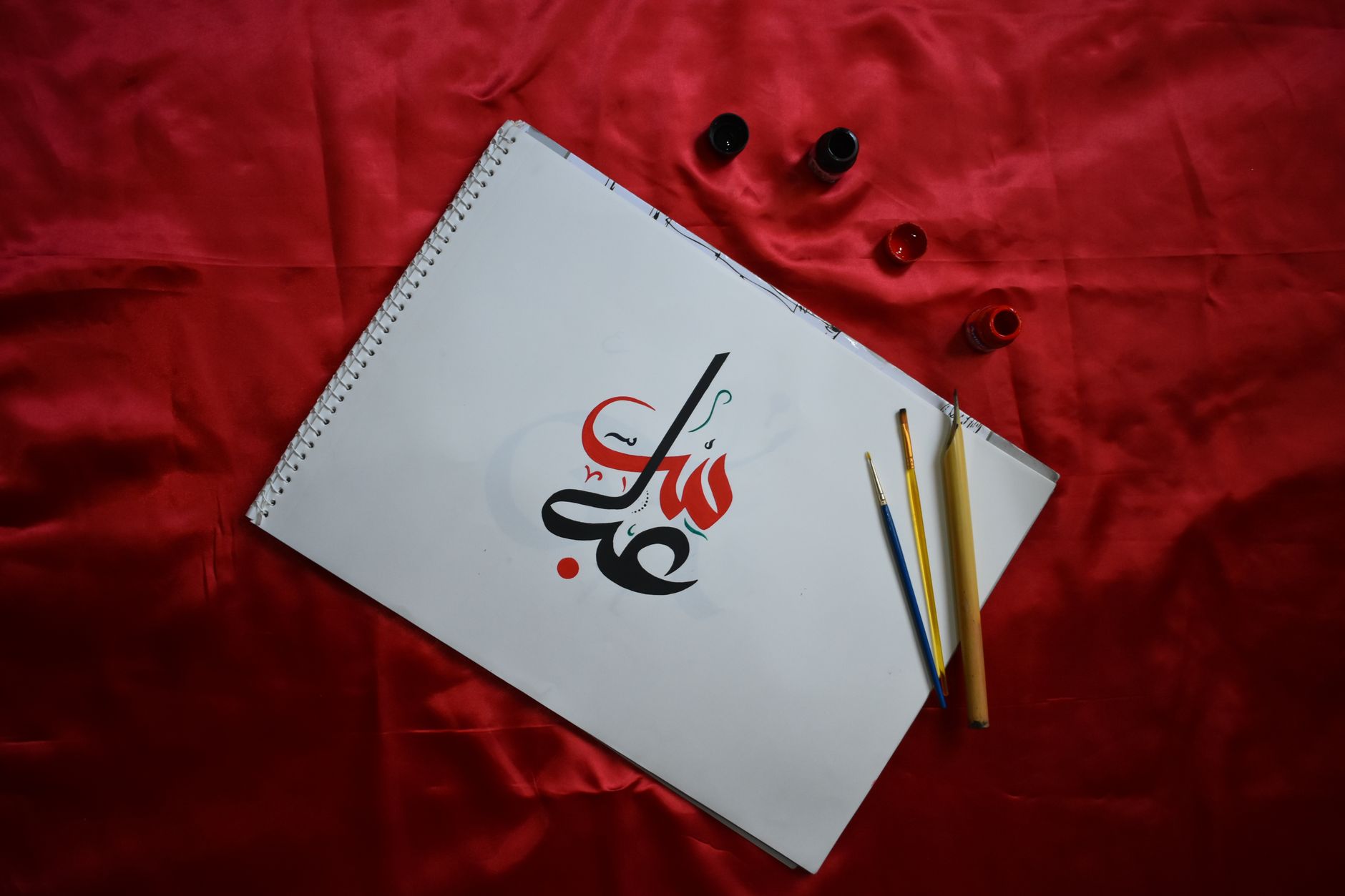
For many in the Western financial world, typography feels like a design choice. A matter of branding, readability, and aesthetics. But when it comes to languages like Arabic, typography isn’t just about how things look; it’s fundamentally about whether they’re correct, and the resulting accuracy (or lack thereof) can have massive financial and legal implications. This article delves into the unique challenges of Arabic typography, the technical debt that has accumulated within the financial sector as a result, and the steps firms can take to address it.
Why Arabic Typography is Different: A Quick Overview
Arabic is a beautifully complex script. Unlike Latin-based languages, it’s written from right-to-left. More than that, letterforms change depending on their position within a word – initial, medial, final, or isolated. These are known as contextual shapes. Adding to the complexity, many letters connect to one another, requiring sophisticated glyph substitution.
This isn’t just a visual quirk. These shapes are meaningful. A missing or incorrect connector can change the entire meaning of a word, which, in a financial context – a contract, a balance sheet, a regulatory filing – is catastrophic. Furthermore, Arabic is a highly cursive script, leading to challenges in correctly rendering numbers (Arabic-Indic numerals) alongside Latin digits, and ensuring proper bi-directional text flow when mixing Arabic and Latin scripts (common in financial reports).
The Rise of Technical Debt
The challenges of Arabic typography weren't always at the forefront of financial technology development. Early systems were often built with a primary focus on Latin-based languages. Arabic support was frequently added as an afterthought, often using workarounds or incomplete implementations. This is where technical debt begins to accrue.
Technical debt, in this context, isn't malicious. It's the implied cost of rework caused by choosing an easy (but limited) solution now instead of a better approach that would take longer. For Arabic typography in finance, this has manifested in several ways:
- Incorrect Font Rendering: Many systems rely on fonts that don’t fully support all Arabic glyphs, or render them incorrectly. This leads to distorted characters, missing connectors, and incorrect shapes.
- Bi-Directional Text Issues: Mixing Arabic and English within the same document or system can cause text to flow in the wrong direction, numbers to be misinterpreted, and overall readability to be severely compromised.
- Lack of Unicode Support: Earlier systems often didn’t fully embrace Unicode, the universal character encoding standard, forcing developers to use proprietary encoding schemes that were prone to errors and incompatibility.
- Poorly Designed Input Methods: Difficulty entering Arabic text accurately and efficiently adds to the problem, as errors introduced at the input stage propagate through the system.
- Insufficient Testing with Arabic: Testing financial systems primarily with Latin-based data often meant that Arabic-specific bugs went unnoticed for far too long.
The Financial Implications: More Than Just Aesthetics
The consequences of these typographic issues in the financial world are far-reaching:
- Regulatory Compliance: Many financial regulations (like those stemming from IFRS - International Financial Reporting Standards) require accurate and auditable documentation. Incorrectly rendered Arabic text can jeopardize compliance. Imagine a discrepancy in a financial report due to a misinterpreted number - the penalties can be substantial.
- Contractual Disputes: A poorly rendered contract in Arabic could be open to legal challenge. The meaning of a clause could be disputed if the typography is ambiguous or incorrect.
- Reputational Damage: Errors in financial communications to Arabic-speaking clients erode trust and damage a firm’s reputation.
- Operational Inefficiency: Manually correcting typographic errors in financial documents is time-consuming and costly.
- Accessibility Issues: Incorrectly rendered text can be difficult or impossible for visually impaired users to read with screen readers, violating accessibility standards. https://example.com/ offers excellent screen reader software.
- Fintech Integration Challenges: As fintech solutions expand into Arabic-speaking markets, these typography issues can create integration headaches and hinder innovation.
Common Problem Areas in Finance
Let's look at some specific financial applications where these issues are prevalent:
- Financial Statements & Reports: Arabic translations of annual reports, investor presentations, and other financial documents are prone to rendering errors, especially when complex tables and bi-directional text are involved.
- Contract Management Systems: Digital contract management systems often struggle with Arabic typography, leading to errors in the storage, retrieval, and display of contracts.
- Payment Systems: Incorrectly rendered Arabic names or addresses in payment systems can cause transactions to fail or be misdirected.
- Customer Relationship Management (CRM) Systems: Inaccurate display of customer data in CRM systems can lead to communication errors and damaged client relationships.
- Loan Origination Systems: Errors in Arabic loan agreements can have serious legal and financial consequences.
Addressing the Technical Debt: A Path Forward
So, what can financial institutions do to address this accrued technical debt? It's not a quick fix, but a multi-pronged approach is essential:
- Unicode Compliance Audit: A thorough audit of all systems and applications to ensure full Unicode compliance is the first step. Identify areas where older encoding schemes are still in use.
- Font Selection & Testing: Carefully select fonts that have comprehensive Arabic glyph sets and are specifically designed for clear rendering in financial documents. Rigorous testing is crucial. Look for fonts that support contextual shaping and ligatures correctly.
- Bi-Directional Text Engine Integration: Invest in robust bi-directional text engines that correctly handle the mixing of Arabic and Latin scripts. Ensure proper number handling.
- Localization Best Practices: Implement localization best practices that go beyond simple translation. This includes adapting the layout and design of financial documents to suit the Arabic reading direction and cultural conventions.
- Input Method Improvement: Provide users with easy-to-use and accurate Arabic input methods. Consider supporting various keyboard layouts.
- Thorough Testing with Arabic Data: Expand testing procedures to include comprehensive Arabic-specific test cases. Employ native Arabic speakers to review all financial documents and systems.
- Developer Training: Provide developers with training on Arabic typography and bi-directional text handling.
- Consider Professional Services: Engage with companies specializing in Arabic localization and typography for expert assistance. https://example.com/ lists several reputable localization companies.
| Area of Focus | Specific Actions | Potential Tools/Technologies |
|---|---|---|
| Unicode Compliance | Audit encoding schemes, update systems to UTF-8 | Unicode Consortium resources, character mapping tools |
| Font Management | Select appropriate fonts, test rendering quality | FontForge, font validators |
| Bi-Di Text | Integrate robust Bidi engines, test thoroughly | ICU (International Components for Unicode) |
| Testing | Arabic-specific test cases, native speaker review | Test management software, translation quality assurance (TQA) tools |
The Long-Term View
Addressing Arabic typography isn’t a one-time project. It requires ongoing monitoring and maintenance. As new technologies emerge and regulatory requirements evolve, financial institutions must continue to invest in ensuring the accuracy and accessibility of their financial documents and systems for Arabic-speaking clients and stakeholders. Ignoring this technical debt will only lead to increasing costs, risks, and reputational damage. Proactive investment is the key to building trust and achieving success in the growing Arabic-speaking financial markets.
Disclaimer:
As an AI assistant, I am not a financial advisor. This article is for informational purposes only and does not constitute financial advice. The inclusion of affiliate links does not influence my recommendations. I may receive a commission if you purchase through these links, but this does not affect the price you pay.