Why Can't China Build World-Class Jet Engines? A Financial Deep Dive
Explore the complex financial, technological, and geopolitical reasons why China struggles to produce jet engines comparable to Western designs, despite its manufacturing prowess.
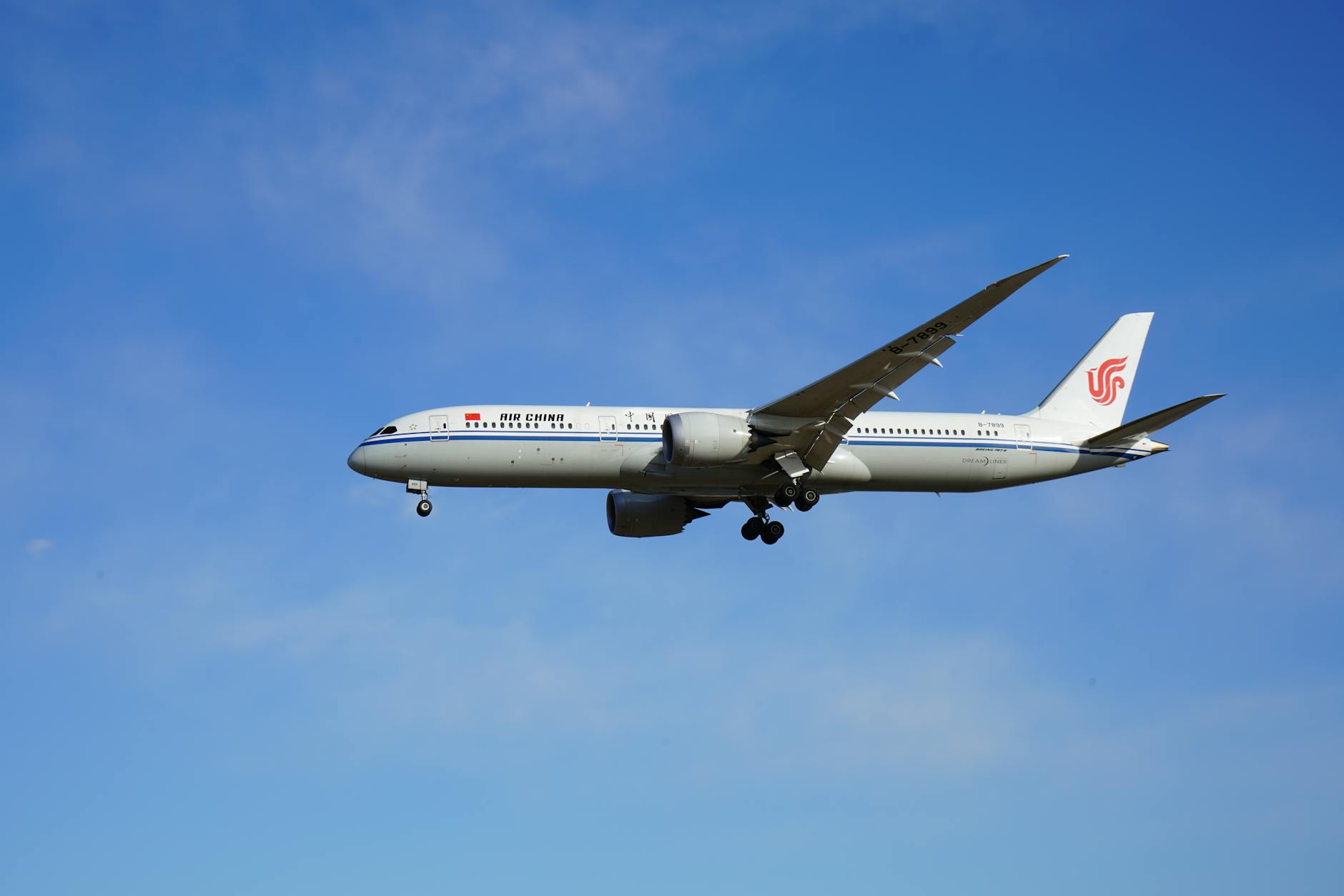
For decades, China has been the world’s manufacturing powerhouse, churning out everything from smartphones to steel with remarkable efficiency and scale. Yet, one critical piece of technology continues to elude its grasp: the modern jet engine. Despite substantial investment and a national push for self-sufficiency, China hasn't produced a jet engine that genuinely rivals those made by leading Western companies like GE Aviation, Rolls-Royce, or Safran. This isn’t simply a technological hurdle; it's a complex interplay of financial constraints, supply chain dependencies, materials science challenges, and geopolitical factors. This article will delve into the financial reasons behind this significant gap, exploring why China's immense manufacturing capability hasn’t translated into dominance in jet engine production.
The Astonishing Complexity of Jet Engine Manufacturing
Before diving into the financial aspects, it’s crucial to understand why jet engines are so difficult to build. They aren’t simply sophisticated machines; they’re masterpieces of precision engineering operating at the very edge of materials science.
- Extreme Temperatures & Pressures: Jet engines experience incredibly high temperatures and pressures, demanding materials that can withstand these conditions without failing.
- Tight Tolerances: The efficiency of a jet engine relies on extremely tight tolerances – components must be manufactured to within fractions of a millimeter. Even minute imperfections can significantly reduce performance and increase the risk of failure.
- Advanced Materials: Modern jet engines heavily utilize exotic alloys (nickel-based superalloys, titanium aluminides) and composite materials for their high strength-to-weight ratio and heat resistance.
- Aerodynamic Design: The shape and internal airflow paths are incredibly complex, requiring extensive computational fluid dynamics (CFD) modeling and wind tunnel testing.
- Long Development Cycles: Developing a new jet engine can take 10-20 years and cost billions of dollars.
These challenges require not just capital but also decades of accumulated expertise – a knowledge base that Western companies have been building for over 70 years.
The Financial Bottlenecks: Investment Isn't Enough
China is investing heavily in its aviation industry, including engine development. The state-owned Aviation Industry Corporation of China (AVIC) receives significant funding. However, simply throwing money at the problem isn’t a solution. Several financial bottlenecks impede China’s progress.
1. The Cost of R&D and Iteration
Developing a competitive jet engine is incredibly expensive. A single new engine program can easily exceed $15-20 billion. This isn’t just for design and prototyping; it’s for countless iterations of testing, failure analysis, and redesign. China's state-directed economic model can sometimes prioritize speed and quantity over thoroughness and rigorous testing, leading to lower quality and reliability. The financial incentive structure doesn’t always reward long-term, painstaking R&D. A focus on meeting five-year plan targets can discourage extensive, costly rework.
2. Supply Chain Vulnerabilities & Dependence on Western Technology
This is arguably the biggest financial – and geopolitical – bottleneck. Jet engine manufacturing relies on a highly specialized, globally distributed supply chain. China is heavily reliant on Western (and particularly American) companies for critical components and technologies.
- Single-Crystal Turbine Blades: These are the most heat-resistant and durable components in a jet engine, and their production requires highly specialized equipment and techniques. The US currently dominates this market. https://example.com/ might point to a book on materials science to understand the complexity further.
- Electronic Fuel Control Systems (EFCS): These systems precisely control fuel flow and engine operation. Honeywell and other US companies are key players.
- Turbine Coating Technology: Advanced thermal barrier coatings (TBCs) extend the lifespan of turbine blades. US companies hold a significant lead in this area.
- ASML Lithography: This Dutch company’s extreme ultraviolet (EUV) lithography machines are essential for creating the sophisticated semiconductors needed for engine control systems and sensors. China is severely restricted in accessing these machines due to US pressure, impacting the development of advanced engine controls.
This dependency creates several financial problems:
*   **High Costs:** Importing these components significantly increases the overall cost of engine production.
*   **Supply Chain Risk:** Geopolitical tensions and export controls can disrupt the supply chain, hindering production.
*   **Technology Transfer Restrictions:**  Western companies are reluctant to transfer critical technologies to China, fearing intellectual property theft.
3. The Hidden Costs of Reverse Engineering
China has a history of attempting to reverse engineer Western technology. While this can provide valuable learning, it’s often a costly and inefficient process. Reverse engineering can lead to:
- Suboptimal Designs: Understanding how something works isn’t the same as understanding why it works. Reverse engineered designs may lack the subtle optimizations that make the original engine so efficient.
- Quality Control Issues: Replicating complex manufacturing processes perfectly is incredibly difficult, leading to quality control problems.
- Legal Ramifications: Reverse engineering can infringe on intellectual property rights, leading to lawsuits and sanctions.
The Talent Gap and Knowledge Accumulation
While China boasts a large pool of engineers, a critical shortage of experienced specialists in areas like turbine aerodynamics, combustion dynamics, and materials science hinders progress. Building world-class jet engines requires a deep understanding of these fields, built upon decades of hands-on experience. Western companies have invested heavily in training and retaining these specialists, while China’s education system historically focused more on rote learning than practical application. Attracting and retaining top global talent is also a challenge, even with competitive salaries.
Geopolitical Considerations and Sanctions
Geopolitical tensions, particularly between the US and China, significantly impact China’s access to key technologies and components. US export controls, implemented for national security reasons, restrict the sale of certain technologies to China. These controls are constantly evolving and are becoming increasingly stringent. This forces China to develop indigenous alternatives, which are often less advanced and more expensive. The risk of further sanctions also deters Western companies from investing heavily in joint ventures with Chinese firms.
The COMAC C919: A Case Study in Engine Dependence
The COMAC C919, China’s domestically produced airliner, is a prime example of the challenges China faces. While the airframe is largely Chinese-made, the engines are currently supplied by CFM International (a joint venture between GE Aviation and Safran). China is developing its own engine, the CJ-1000A, but its performance and reliability are still below Western standards. The C919’s reliance on CFM engines highlights the continuing gap in China’s engine technology. https://example.com/ could point to financial reports detailing the challenges and costs associated with the C919 program.
<br>
Here’s a quick comparison of key metrics:
| Feature | Western Jet Engine (e.g., GE9X) | Chinese Jet Engine (e.g., CJ-1000A – current status) |
|---|---|---|
| Thrust (lbs) | 134,000 | 15,000 – 17,000 (target) |
| Bypass Ratio | 10:1 | ~6:1 (estimated) |
| Materials | Advanced Nickel-based Superalloys, CMC | More conventional alloys, limited CMC |
| Fuel Efficiency | Industry Leading | Below Western Standards |
| Reliability | Proven track record | Still under development & testing |
Looking Ahead: Can China Close the Gap?
China is undoubtedly making progress in its aviation industry. Continued investment in R&D, coupled with a focus on building a robust domestic supply chain, will be crucial. However, overcoming the financial and technological bottlenecks will require a long-term commitment and a willingness to prioritize quality and innovation over speed and quantity. The geopolitical landscape will also play a significant role. A reduction in trade tensions and greater access to Western technology could accelerate China’s progress, but that seems unlikely in the current environment. For the foreseeable future, China will likely remain dependent on Western technology for its most advanced jet engines.
Disclaimer
This article contains affiliate links. If you purchase a product through these links, we may earn a commission at no additional cost to you. This helps support our research and content creation. We only recommend products we believe are valuable and relevant to our audience.
Image Suggestions:
- An image of a jet engine being manufactured in a Western facility, highlighting the precision and complexity. (
- A graphic illustrating the global jet engine supply chain, highlighting China's dependence on Western components. (
- A photo of the COMAC C919 aircraft, emphasizing its reliance on CFM engines. (
- A microscopic image of a single-crystal turbine blade, demonstrating the advanced materials science involved. (
- A graph comparing R&D spending on aerospace between China and the US. (